

Safety & equipment
For us, safety is not a chapter in the appendix but the reason the course is built the way it is. Here is what that means in practice.
Shallow water first. Always.
We have no course where a child goes straight to depth. Every skill is first practised where the child can stand, where there is hardly any current and where they can surface at any time.
Shallow water
Knee-deep. Put on the mask, face in the water, breathe through the regulator. The child is standing the whole time.
Up to 2 metres
First descent, equalising, clearing the mask, recovering the regulator. The instructor is within arm’s reach.
A little deeper
Only on the Junior Open Water Diver: buoyancy control, buddy breathing, emergency ascent — until everything is calm and confident.
Only then the reef
And even then only if the child wants to. Anyone who hesitates in the shallows doesn’t go deeper — that is not up for discussion.
Why children’s sizes are no minor detail
The most common reason a first dive goes wrong isn’t fear — it’s a mask that is too big. It fills with water, the child gets water up their nose, gets a fright and wants out. After that the day is over.
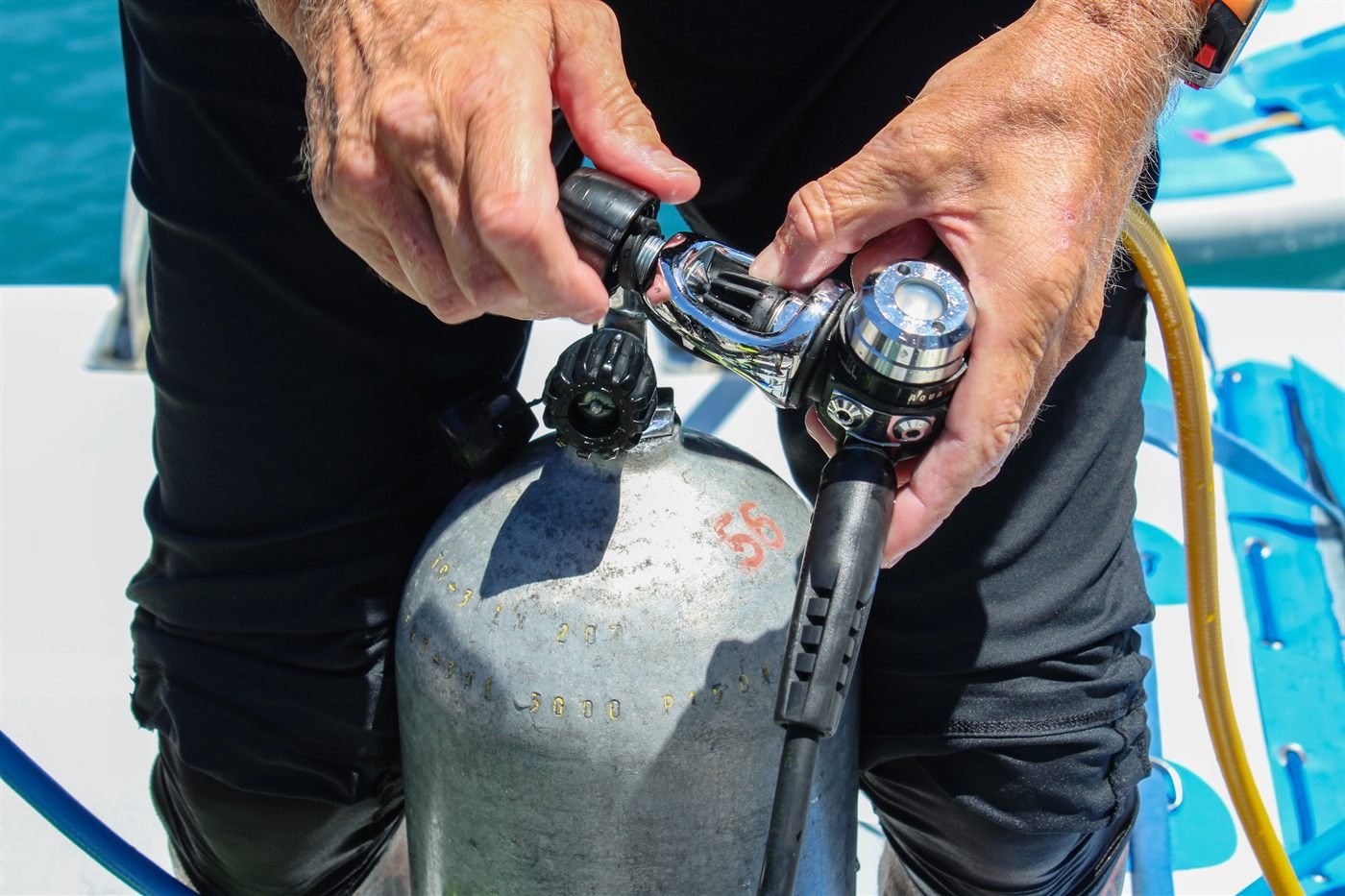
That’s why we have complete equipment in children’s sizes: masks with a small internal volume, short open-heel fins instead of full-foot fins, BCDs from size XXS and light tanks. An 8-year-old with us doesn’t haul a 12-litre tank.
We deliberately take our time with fitting — to many families it looks like dawdling at first. It is the quarter of an hour that decides the rest of the day.
What your child wears
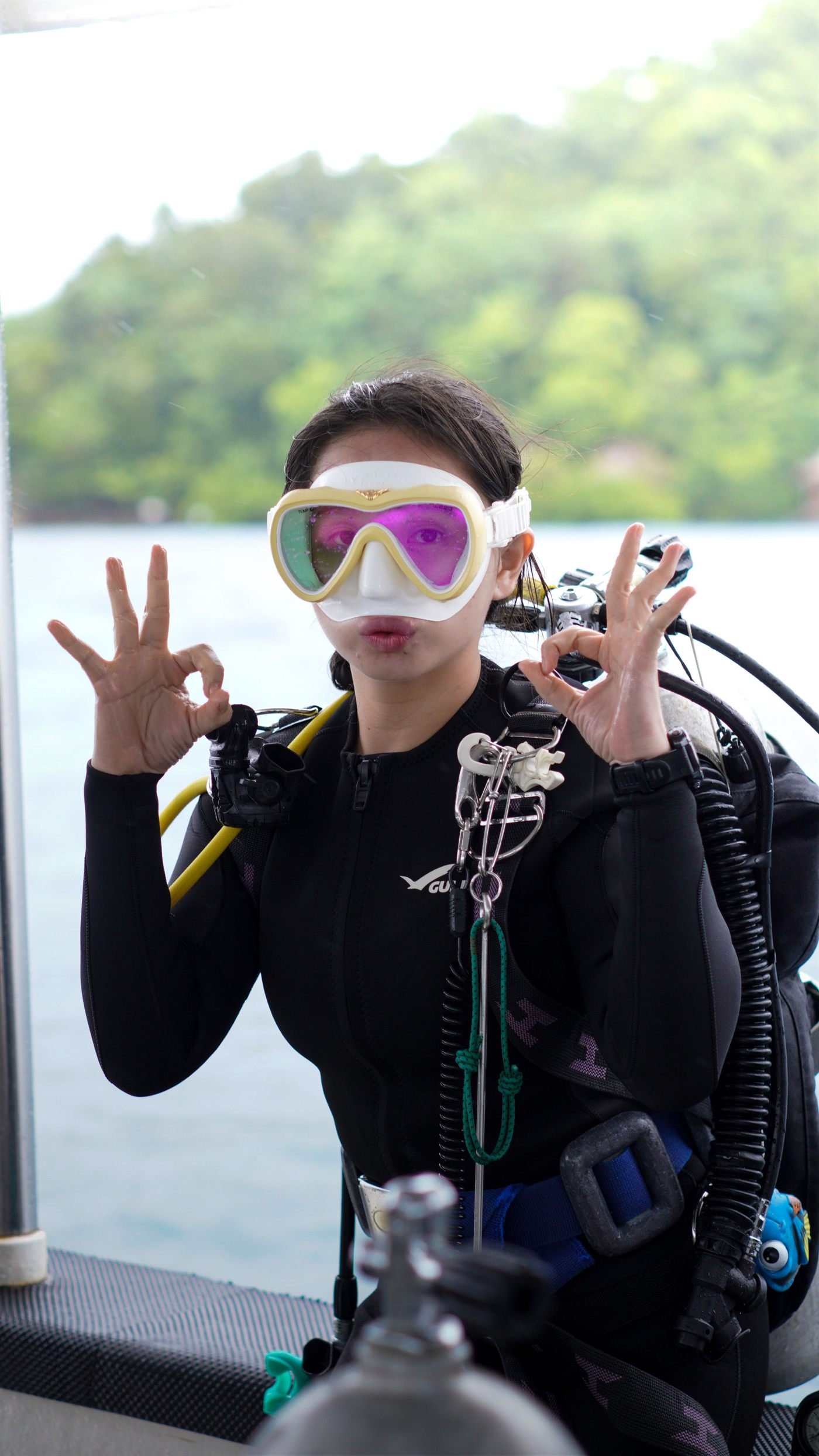
Mask
Small internal volume, soft silicone skirt, adjustable strap. Fitted individually and tested dry before going into the water.
Fins
Short and soft, with a heel strap. Long fins are too tiring for children’s legs and quickly cause cramp.
BCD
From size XXS, with waist and crotch strap so it doesn’t ride up during the descent.
Tank
Small tanks for small children. It is only worn in the water — on land the instructor carries it.
Wetsuit
Children cool down much faster than adults. That’s why they tend to get a thicker suit — even in summer.
Instruments
Pressure gauge and depth gauge are always there. From the Junior Open Water Diver onwards, your child learns to read them.
What you should have with you
Definitely
- Swimwear (ideally already on)
- Towel
- Sun protection — reef-friendly, without oxybenzone
- A hat for the time on deck
- Water bottle
- Passport or a copy for registration
You can leave at home
- Your own diving equipment — we provide everything
- A mask from a holiday shop (rarely fits properly)
- Armbands or swimming aids
- An underwater camera on the first day — it only distracts
- Valuables and jewellery
The three rules every child learns with us
Never hold your breath
The most important rule in diving. Always keep breathing calmly — even if something surprises you.
Ascend slowly
Never faster than your own bubbles. Sounds simple, and is practised until it becomes automatic.
Touch nothing
Neither corals nor animals. To protect the reef — and because some things in the Red Sea are very well camouflaged and very venomous.
Questions about safety?
Call or write to us — especially with health topics, we would rather clarify things beforehand than on the course day.